Friday, March 19, 2021

The South China Sea - By Kristen Yu

 Course Themes

  1. Economic and political development including ‘globalization’

  2. The relationship between the West/USA and the rest of the world


The South China Sea is a popular and convenient trade route that amasses more than $3 trillion dollars per year. It is responsible for one-third of the world’s global shipping and large reserves of oil and gas. It also acts as a crossroad link between the Pacific and Indian oceans. Many countries claim ownership of its islands and reefs, and currently, each country has its own patch and the rest of the South China Sea is labeled as international waters.


The conflict regarding the South China Sea comes with China claiming 90% of the area, based on an old and outdated 1947 historical map of the Sea. These claims were dismissed in 2016 in court and also classed the islands in the South China Sea as rocks, but the results of the suit were ignored by China. The islands in the suit are owned by Taiwan, Malaysia, and Brunei. Philippines and Vietnam also have ownership of the islands and have built on them. Out of all of the countries, China has built the most artificial islands in the South China Sea and has committed many international law crimes.


The arising conflict due to China’s claims on the area has been displayed by China’s increasing bases on the coral reefs and rocks and its military grip in the South China Sea. While the US is not directly involved, they back their alliances (Japan, Australia, and India) to counter China’s presence in the Sea and have sent warships to stand up for the freedom of navigation. The US fears that the behavior being displayed by China shows a future advancement to a stronger authoritarian regime. China has not received this lightly, claiming that these actions done by the US affects China’s peace and stability.


The story connects to two course themes, as this economic situation can affect economic development around the world and plays into government beliefs. It also shows the difference between the West’s view of freedom of navigation versus those of China’s, which believes the South China Sea is theirs.


Discussion Questions

  1. Why is freedom of navigation important economically and politically? How could repressing it create negative outcomes?

  2. How should sovereignty of navigation and trade routes be declared? Be regions close or equal division?


Sources

“Why Is Everyone Fighting over the South China Sea?” BBC News, BBC, 19 Mar. 2021, 5:07 PM, www.bbc.com/news/av/world-asia-56459744. 


Sri Lanka: Religious Conflict


Sri Lanka: Religious Conflict

In 2019, after the suicide bombers attacked Catholic churches and tourists hotels killing 250 people, the bombers had a clear link to the islamic terrorist group known as ISIS. After the matter, a temporary ban on all face coverings were put in place in majority buddhist nations and all nations affected were on high alert. In today’s Sri Lanka, the government puts plans to not only ban burqas forever to “ensure national security” but also close 1,000 islamic schools.

 A burqa is an outer garment worn to cover the entire body and the face and is used by some Muslim women and girls. The minister of national security Sarath Weerasekara has for a long time said, “The burqa has a direct impact on national security.” Whilst he claims the Burqas are a threat to national security many are viewing the ban as going against religious rights that should be given to all muslim women. Along with believing it should be a right, many Sri Lankans have been told by government officials that the Burqas are evidence of religious extremism. Many are protesting against the ban, however, the push for it has been backed by much of the government.

In addition, the government has put forth plans to shut more than 1,000 islamic schools. The closing of the islamic schools is said to have happened because the schools go against the education policies in Sri Lanka. Although officials believe that the schools go against many of the guidelines for education, an argument can be made that the government is trying to appease Sri Lanka’s Buddhist majority and cause divisions. 

In 2021, the looming effects of the church bombing have led all government officials in Sri Lanka to be on edge. Furthermore, the Muslims today have been forced out of their religious rights. 

Discussion Questions:

  1. In your opinion, Is a ban on the Burqas restricting religious rights?

  2. What instances in history, that you can think of,  have made evident indications of a religious divide? https://www.cnn.com/2021/03/15/asia/sri-lanka-burqa-ban-intl-hnk/index.html

https://www.aljazeera.com/news/2021/3/14/all-about-control

https://www.christianitytoday.com/news/2021/march/sri-lanka-burqa-ban-madrassas-religious-freedom-nceasl.html


Thursday, March 18, 2021

10 Year Anniversary of the Syrian Civil War - By Valerie Fan

https://www.cnn.com/2021/03/15/middleeast/syria-anniversary-damon-analysis-intl/index.html

            March 15th, 2021 marks the 10th anniversary of the start of the Syrian civil war. 

“When I close my eyes, I can still hear the excitement in protesters' voices during the early days of the uprising a decade ago. How full of hope they were, how utterly convinced that, if they just hung in there long enough, there would be change. Surely, they thought, if world powers saw their suffering, something would be done.”


In 2011, successful uprisings against totalitarian regimes, known as the Arab Springs, inspired Syrian’s oppressed civilians. After 15 Syrian boys were detained for supporting the Arab Springs, peaceful protests against Syria’s totalitarian regime emerged in Syria as well. Civilians were “full of hope” and “utterly convinced” that they could end their suffering soon too; evidently, that was not the case. Days after the protests started, Syria’s totalitarian regime, led by Bashar al-Assad, violently reacted and killed hundreds of protesters and detained more. In June of 2011, the Free Syria Army, a rebel group determined to overthrow the government, was formed. Since then, the conflict between rebels and the Syrian government has devastated the country and its civilians. In these 10 years, the Syrian civil war has revealed the sectarian conflict between the Sunni majority and the Alawite minority (Pres. Assad is apart of the Alawite minority). Additionally, the conflict has involved various other countries and become a complex proxy war.


The Syrian civil war has destroyed the lives of civilians, causing countless to flee and seek refugee in other countries; the number of refugees has overwhelmed countries, and thus, the Syrian civil war has led to the Syrian refugee crisis. I was given the chance to represent Greece for the Syrian refugee crisis at a Model UN conference. When first researching the topic, I was appalled by the state of the civilians and the refugees, and heartbroken to hear the stories. 


“I wish world leaders could meet 13-year-old Renad... A few years later, she lost her leg as was playing hide-and-seek by her front door. Her family hadn't known that mines were daisy chained along the walls of their home.”


The extent of the crisis made me assume that the world powers were making every effort to put an end to the suffering of civilians. The UNHCR High Commissioner Filippo Grandi even considered the crisis the “biggest humanitarian refugee crisis of our time, a continuing cause for suffering.” Instead, I found that in many countries, the opposite was happening. Greece, among other countries, could not sustain the flow of refugees, and according to Amnesty, has responded with a “package of inhumane measures that violate EU and international law. Security forces have been firing tear gas and repelling dinghies trying to reach Greece’s shores.” Additionally, European leaders have openly supported Greece’s actions and called Greece a “shield” to refugees entering Europe. Of course, I can understand why countries would prioritize themselves first. Supporting refugees will inevitably take a toll on the country, however, this crisis cannot be ignored. 


The 10th anniversary of the start of this conflict should be a reminder that civilians have been living in fear and are fleeing their devastated homes, only to be greeted by even more hostile treatment. “We stare at children who have known nothing but war for a decade now.” 


“I wish decision-makers could for one minute experience the fear of seeing fighter jets overhead. A bombing sucks the air out of your body. To watch people flee, barefoot children freeze, the trauma engulfing their faces, suffocates you with emotion.”


Discussion questions:

  • How can countries be incentivized to take in more refugees? 

  • When is refusing to accept refugees justified?


Other Sources: 

https://www.npr.org/2021/03/15/976352794/syrias-civil-war-started-a-decade-ago-heres-where-it-stands 

https://www.aljazeera.com/news/2018/4/14/syrias-war-explained-from-the-beginning

https://www.amnesty.org/en/latest/news/2020/03/greece-turkey-refugees-explainer/


Conflict in Myanmar - Cate Ortiz, Evelyn Cisneros, Valerie Fan


Myanmar Conflict Presentation

Course Themes:

  • How do social allegiances like nationalism and religion motivate political activism and change?

  • How has the changing nature of media as a platform for human interaction from print to radio/TV to internet/social media affected politics, economics, and social affairs?


Throughout all of its history, Myanmar has been suppressed into either colonial or military rule. Myanmar, then known as Burma, was originally colonized by the British but got its independence in 1948. Since their independence, the fight over the ideal system of government for the people has been a source of inner conflict in Myanmar. In 1962, the military staged a coup and remained in power for 26 years. In 1988, the National League of Democracy (NLD) led by Aung San Suu Kyi began to rise to power, and hope for a democratic system was in sight. The NLD won multiple elections by a landslide. The 1990 election was not recognized by the Tatmadaw, Myanmar’s military junta, but the 2011 election marked the start of the NLD’s leadership. In the November 2020 election, the NLD won by a substantial amount yet again, however, the Tatmadaw refused to accept a democratic Myanmar and claimed election fraud, eventually staging a coup in February 2021. Since then, the people of Myanmar have become fed up with the Military’s plans for a dictatorship and have begun to protest. The protests are aimed to hopefully create a democratic Myanmar. 


The Myanmar conflict relates to two course themes, the first being: How do social allegiances like nationalism and religion motivate political activism and change? Social allegiances, such as loyalty to the NLD and democracy, reflect a person’s values and beliefs, and thus motivates political activism and change; social allegiances unite people with similar beliefs and give people the manpower to promote their cause. In Myanmar, citizens have organized and are protesting against the coup because it actively and forcefully oppresses the beliefs of the NLD. Despite the dangers, citizens are fighting for the removal of the Tatmadaw from power and the reestablishment of Aung San Suu Kyi and the NLD.


The Myanmar protests also relate to our second course theme: How has the changing nature of social media for human interactions affected politics, economics, and social affairs? Social media has been utilized by both protesters and the Tatmadaw. Protesters use social media(especially Instagram, Twitter, and Facebook) to spread information, raise awareness, and organize protests. Social media can quickly reach a wide audience, and for that reason, the Tatmadaw has been suppressing civilian access to social media through internet blackouts, social media bans, and by arresting online critics. The Tatmadaw also uses social media to spread information, however, was banned from posting by Facebook after the coup. Facebook states that the Tatmadaw posted content that “violat[ed their] violence and incitement and coordinating harm policies”. Additionally, according to TIME, the Tatmadaw had been spreading hate speech and misinformation about the Rohingya minority, eventually leading to the Rohingya genocide. Social media is a huge game-changer in conflicts like the Myanmar situation; information, credible or not, spreads like wildfire, and it has both assisted and harmed the protesters and the Tatmadaw. 


The Myanmar situation is still unfolding, and for that reason, there are still many unknowns and speculations. For example, China has not publicly condemned the Myanmar military for the coup, leading many to believe that China is supporting the coup and helping the Myanmar military build the internet firewall and suppress protesters. Another controversy is Aung San Suu Kyi’s true stance. The Myanmar government has been condemned for the inhumane actions against the Rohingya minority by the Tatmadaw, now being accused of genocide; however, Suu Kyi never condemned the Tatmadaw for their actions, and even defended them during her time as State General. This has led many to wonder what her political stance really is (i.e. she may support democracy, but may not support freedom of religion), and has led some to believe that she is actually under the influence of the Tatmadaw. 


The Myanmar conflict is still ongoing, and citizens continue to protest in an effort to restore democracy to the country.


Discussion Questions:

  • Imagine your government is violent and oppressive after all these years it’s time for change. How would you go about promoting/making those much-needed changes? How would you spread the word?

  • Given that the military has the resources to physically dominate a country, how can you prevent the military from becoming too powerful?

Sunday, March 7, 2021

Conflict in the Tigray Region by Lexie Clark


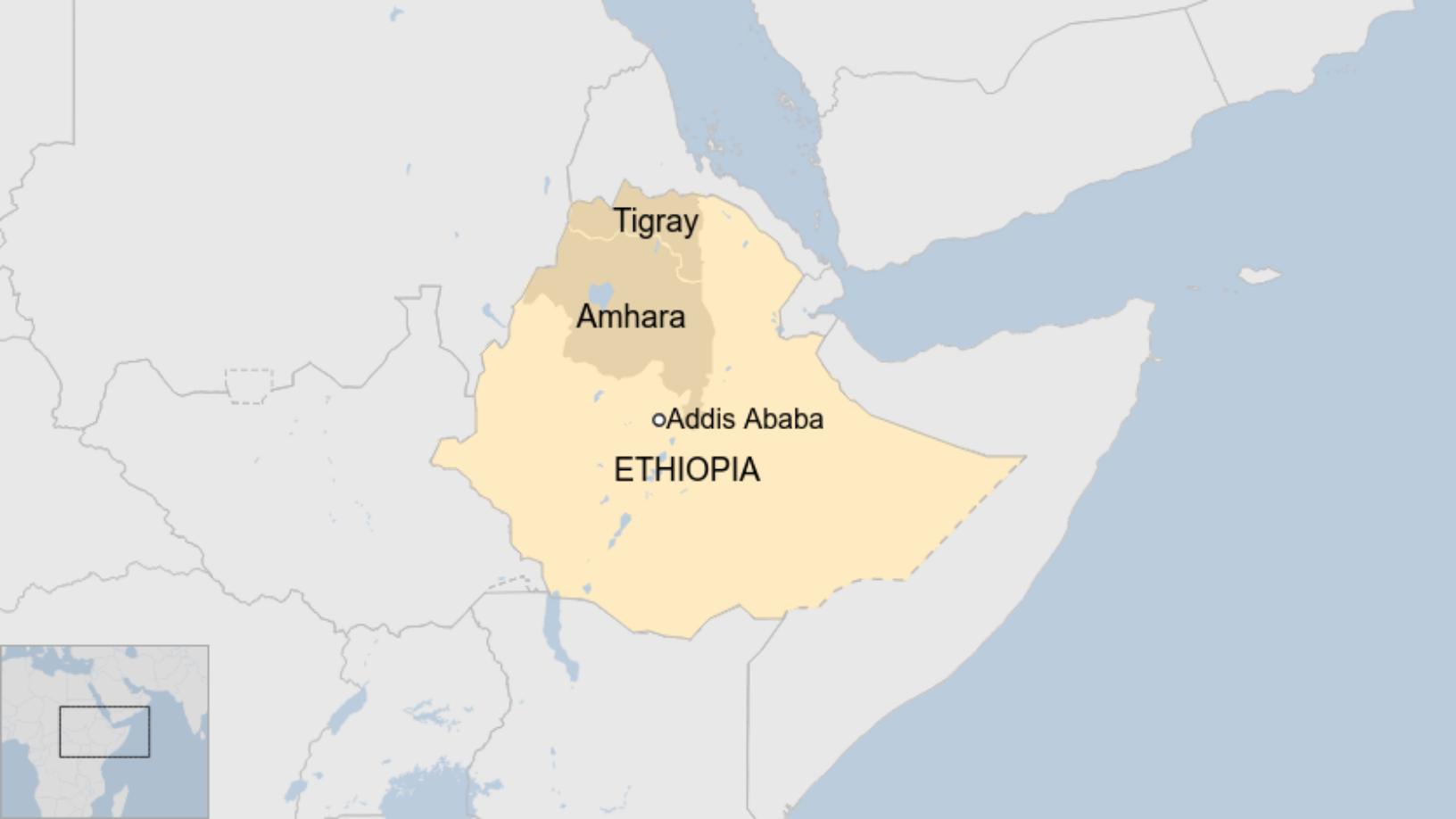
Tigray crisis: Local residents ordered to defend against Ethiopia army -  BBC News

 Tigray, a region in Ethiopia, is currently experiencing a major conflict.The Prime Minister of Ethiopia, Abiy Ahmed, wanted to unite Ethiopia by bringing together the countries’ different regions, each with its own system of government. By unifying the country, Abiy Ahmed hoped to strengthen the federal government's power and weaken the regional power. Due to the Covid-19 outbreak, the Prime Minister postponed each region’s parliamentary elections, however Tigray continued to hold them. Angered with their choice, Abiy Ahmed cut all funding from the Ethiopian government. Things turned violent on November 4th, 2020 when Abiy Ahmed claimed the Tigrayan People’s Liberation Front was stealing weapons from the government military base. This information was proven accurate and soon after, Ahmed cut all Internet access the region had, essentially putting the region of Tigray on lockdown. Soon after, fighting broke out and Abiy Ahmed sent militia fighters from the region of Amhara to fight against Tigray officials. In addition, Eritrea, a country near Ethiopia, joined Amhara in fighting against Tigray. As a result, Tigray is facing a humanitarian crisis as well as the threat of ethnic cleansing. According to the New York Times, U.N officials claim: “just 20 percent of the region can be reached by aid groups because of government-imposed restrictions.” Not only is Tigray as a region struggling due to the humanitarian crisis, there have also been accusations of the Amhara militia fighters attempting to push out the Tigray ethnic population. The U.S government made a report claiming: “ethnic Tigrayans had been attacked and had their homes pillaged and burned.” It was observed that other towns with a large Amharan population had significantly less violent acts, hinting at the possibility of an ethnic cleansing of only the Tigray people. Abiy Ahmed’s office continues to claim that they are aware of the situation and want to bring peace to what is happening in Tigray. The New York Times reports that the government “reiterates its commitment to enabling a stable and peaceful region.” As time progresses, more and more Tigrayan people are facing violence as their homes and towns are invaded. President Joe Biden has contacted the President of Kenya and the two have discussed the steps that need to be taken in order to prevent even more hardships from happening. This March, the United States is expected to lead the United Nations Security Council and observers have stated that the U.S should use this position to their advantage and bring awareness to the situation. 

Discussion Questions: 

1. How has the Prime Minister abused his powers and how might this affect the political future of Ethiopia?


2. Based on prior knowledge of geography and how it affects political relations,  how might the location of Tigray affect the situation it is in now?


Sources: 

https://www.nytimes.com/2021/02/26/world/middleeast/ethiopia-tigray-ethnic-cleansing.html


https://www.nytimes.com/2020/11/05/world/africa/ethiopia-tigray-conflict-explained.html


https://www.nytimes.com/2020/11/04/world/africa/ethiopia-abiy-tigray.html


https://www.bbc.com/news/world-africa-54911009

Israel by Sarah Kaplan


For a long time, the question of who is and isn’t a jew has always been a debate in Israel. Since the state was founded, the government has had Orthodox Jewish authorities who didn’t view converts to Judaism. This all changed on Monday when the Israeli supreme court granted the right to citizenship to people who convert from their religion to conservative or reform Judaism and not orthodox. This quickly became popular with an overwhelming amount of non-Jewish people who wanted to convert to Judaism.  Before, there was a ‘Law of Return”, that gave foreign-born Jews or anyone who had a Jewish relative, the right to automatic citizenship. On the other hand, for the reform and conservative groups, it was a victory and 15 years in the making. This win shrinks the monopoly that the orthodox rabbis have had in terms of Israeli society.  Many people were for and against this ruling including prime minister Benjamin Netanyahu and Yossif Yosef. Netanyahu said that it would be a reason to vote for his party as well as to “ensure a stable right-wing government that will restore sovereignty to the people.” In addition, Anat Hoffman, who is the executive director of the Israel Religious Action Center, thought this was a great idea because it opened up the idea that there is more than one way to be Jewish. On the other hand, there is Yossif Yosef who is one of the chief rabbis and he thought that this was a huge mistake and the conversion to Reform or Conservative is evidence of counterfeit Judaism. This ruling is very sensitive due to the upcoming election and the battle between the secular and religious communities that have been going on throughout the pandemic. Furthermore, this might seem like a good idea but according to the Isreal Religious Action center, the conversion process takes 2 to 3 years.


Discussion Questions:

  1. What do this new ruling and the response of the people tell us about the orthodox people who live in Isreal?

  2. To what degrees should religion be involved in the government of a country? 


Source: 

https://www.nytimes.com/2021/03/01/world/middleeast/israel-jewish-converts-citizenship.html


Friday, March 5, 2021

The Yemen Proxy War By: Alexandra Clark, Sarah Kaplan, and Kristen Yu


The Yemen Proxy War Presentation

 Course Themes

  1. Show how ideologies can be used as tools for acquiring power as well as being the goal or end of a political movement once in power

  2. How has the rise of the USA as a superpower been perceived by the rest of the world over time?


In 2012, when President Ali Abdullah Saleh resigned and Abdrabbuh Mansur Hadi became president of Yemen, President Hadi faced many troubles with the already fragile (both politically and economically) country of Yemen. This insecurity allowed Yemen’s rebel group the Houthis, which are also militarily backed by Iran, to take over the capital Sana’a and rush President Hadi out of office. Saudi Arabia, seeing this rise of power in the Houthis and knowing their relationship with Iran, which Saudi Arabia is in a cold war with, came into Yemen, with the support of other Sunni Arab states and the United Kingdom, United States, and France, to stop Iranian (Shiite) influence in Yemen and to restore the presidency of President Hadi. In 2015, the war in Yemen was declared.


This proxy war, still going on to the present-day (2021) has had many battles (Aden), effects on the economy (Saudi Arabia’s oil facilities), and pushed Yemen into becoming the world’s largest humanitarian crisis (Bombings, blockades). Outside involvement, including the US’s arms deals with Saudi Arabia and the United Arab Emirates, which now under the Biden administration is coming to a stop as he calls for ceasefire in the Yemen War, and the United Arab Emirates-backed south Separatists in Yemen also add to the war and creates tension as the two foreign countries show bias for Saudi Arabia. The Yemen War, now with the United States backing out and dealing with COVID-19 in Yemen, Saudi Arabia, and Iran, is hard to know what events will happen next.


Our first-course theme relates to the conflict Yemen is currently experiencing. The differing ideologies between Iran who are a Shiite majority and Saudi Arabia who are Sunni majority lead to a fight for political influence and power. Our second-course theme relates to the involvement of the United States in the war and their impact, as their arms deals reveal an ally to Saudi Arabia and worse, they are profiting off of the war crimes Saudi Arabia and the United Arab Emirates do in Yemen. Since the United States is seen as a superpower, its involvement in the Yemen War is a huge impact, and the actions the United States makes in other foreign affairs, like the Yemen War, will be remembered.


The Yemen humanitarian crisis is the largest in the world. More than 80 percent of the population relies on aid including 12 million children. In addition, children and adults don’t have access to food and clean water or proper healthcare, cities have been destroyed, and schools are closed. To make matters worse, children are being killed and being recruited to help fight in the war.


Discussion Questions


  1. Is the enemy of my enemy my friend? Or should countries not work together just for the sake of a common enemy?

  2. Should economic relationships between foreign nations reflect their political relationships? How far?

Friday, February 19, 2021

Rollout of COVID-19 Vaccinations


With COVID-19 still lingering, people all over the world are still vulnerable. With the slow rollout and short supply of vaccines the only thing preventing the virus from it’s opportunities to spread are the countless restrictions on our daily lives. As of right now, the three vaccines developed by Pfizer, BioNtech, Moderna, and AstraZeneca are currently being released to the public. Frustration continues to grow throughout the world as people are eager to get the vaccine as soon as possible. Countries worldwide are shutting down vaccination sites due to low supply of vaccines. President Biden has set a goal for the United States to administer 1.5 million doses of the vaccine daily. Despite the vaccines not being approved by the FDA these vaccines have been given federal approval for an emergency rollout of Moderna, Pfizer and BioNtech. Patients are required to receive two doses of the vaccination weeks apart. It is estimated that 70-90% of the population needs to acquire the vaccination in order to reach immunity. The federal government has recently recommended that states only allow citizens 65 and older to get vaccinated. As well as health care workers and long care residents working in care facilities. With this the only way to keep preventing the spread of this virus is to follow all protocols and stay safe. 


Discussion questions: 

1. Will the rollout of this vaccination be the only way to stop the spread of COVID- 19?

2. Should States start acquiring more age groups to receive the vaccine?

Sources:

 https://www.nytimes.com/interactive/2020/us/covid-19-vaccine-doses.html

 https://www.cnn.com/2021/02/19/health/pharmacies-covid-19-vaccine-demand wellness/index.html 

https://www.cnn.com/2021/02/19/health/delay-coronavirus-vaccines-second-dose/index.html 


Arms control with Iran by Kayla Roth and Gabriella Sui


Ever since 2018, when the US pulled out of the JCPOA (Joint Comprehensive Plan of Action), Iran's nuclear activity has been steadily increasing. In 2019 Iran began to ignore the nuclear program limitations, violating the JCPOA. Since then Iran has been resuming nuclear activities. Up until 2021 they have announced new plans to develop activities for uranium metal production. With this they seek to eventually design a fuel for Tehran research reactor. ( Yet another violation of JCPOA) Because of this violation, Iran is not supposed to produce uranium for another 15 years. But what’s to stop them from doing so? 

Iran’s increase of nuclear activity is creating conflict in the middle east, specifically in Israel. In 2020 Iran’s top nuclear scientist ( Mohsen Fakhrizadeh) was killed by a remote weapon controlled by a satellite. In the early 2000’s Fakhrizadeh had a huge role in Iran’s nuclear program.. Now, Iran believes that it was Israel’s doing. Although it is not clear from the Iranian side of what actually happened due to their story changing significantly, it is reported that Fakhrizadeh was wounded with his car completely damaged with bullet holes and later exploded. Iran’s response to this had the media project a threat of revenge for their scientists killing. With all fingers pointed at Israel, they have not yet spoken out on the supposed allegations. 

Israel and Saudia Arabia have recently been seeking support through each other, hoping nuclear activity will wind down in Iran. Afraid of what might happen, these two powers- ones we never would have thought would side together, are eager to establish diplomatic relations.  Some questions we might ask are: Is this an effect of fear? Is fear preventing or creating conflict in this situation?


Discussion questions: 

Why is the majority of the world opposed to the idea of countries getting new nuclear weapons? 

Why do you think certain countries feel they need nuclear weapons? How can this relate to fear?


sources:

BBC 

Nytimes Crf.org  

Nytime- opinion  

Trump’s withdrawal from the Iran nuclear deal, explained

un.org

washington post

 Nytimes

armscontrol.org


Anti-coup protests in Myanmar by Kayla Roth


Here is a video to inform you of the history of the Myanmar government


On February 1, 2021, people on the streets of Myanmar found themselves woken up to witness a  coup unfolding. Aung San Suu Kyr, one of the strongest voices of peaceful resistance and the Former State Counsellor of Myanmar, along with other leaders, have been detained by the Junta, or Myanmar military, as they attempt to seize control of the state. Since then, the military has announced a year-long state of emergency. Despite this announcement, the people of Myanmar have not backed down. Terrified of the days of the Junta- they are on the streets, fighting for their newfound democracy to be restored, taking part in a nationwide civil disobedience movement. 

The people of Myanmar are creating a mass uprising, catching generals off guard. In street rallies, artists have held up paint brushes, poems, even spray painted messages mocking the army chief who staged the coup. People outside the capital have gathered together along a railroad line to disrupt train services, as well as forming together to withdraw their own money from a military-owned bank. 

In the capital, people are gathering on the streets holding crimson signs (the signature color of the National League of Democracy), chanting in unison, and holding up images of their detained leader. People fighting on the streets of the capital are holding up a three finger salute, originated from the Hunger Games. It is becoming a common sign in Myanmar's history, symbolizing resistance and solidarity of democracy movements- an anti coup signal. 


What can the three finger hunger games symbol tell us about what the people of Myanmar are fighting for?

What is the effect/ cause of protests? Do you think protests are effective?


Sources

https://www.nbcnews.com/video/protesters-defy-myanmar-s-military-coup-with-civil-disobedience-101083717593 

https://www.nytimes.com/article/2021-myanmar-coup.html 

https://www.cnn.com/2021/02/06/asia/myanmar-coup-what-led-to-it-intl-hnk/index.html 

https://www.nytimes.com/2021/02/17/world/asia/myanmar-coup-protest-art.html

https://www.nytimes.com/2021/02/07/world/asia/myanmar-coup-protests.html 


Indian Farmer Protest. (repost)

 India's Farmer's Movement

By: Harishkumar Selvakumar


In the busy metropolis of New Delhi, a rare sight is to be seen: hundreds of tractors thundering down the highways. This is the response to a serious and growing problem in India: the hard and suffering filled life that farmers are subjected too. The farmers have been receiving severe blows from their own government. The recent actions concerning the restrictions of private companies and their relations with farmers have been described as "pro corporate" and harmful to the large population of agriculturalists. These new regulations give companies more freedom in the agriculture market, and on the contrary make lives of farmers a much more difficult. As a heavily agriculture dependent nation, India's farmers are an important asset to both itself and the world, with nearly 4 billion dollars of agriculture being exported to various countries every month. However, such an important job comes at a price: half of the country's farmers are in debt due to the absurd and tyrannical laws in place. Nearly 10000 farmers committed suicide in 2019 alone, and the rest live with laws of extreme privatization above them. This protest sparked more conflict, with the Indian army bearing weapons and tear gas and beating down on the angered farmers, resulting in one death. The treatment of the farmers sparked a rage across the world. This conflict has impacted the food production in India considerably, and in turn impacts a major source of food imports in many other nations. The entire world has begun a movement to protest the unfair, selfish, and greedy regulations in place. The farmers and activists both hope that at the end of this movement, the Indian farmer's life will be much better than now, and the world will be able to receive food knowing that those who worked hard for it were rewarded and treated fairly. 

Discussion Questions:

1. To what degree should the interests of private corporations and companies be considered and met in areas such as farming?

2. Some critics have described the actions of the Indian farmers as violent and rioting. Are the emotions and reactions of the farmers an appropriate response to the government? Should actions be taken against corporations themselves, rather than the government?


Sources:

The Star

CNN

NYT

Guardian 

Wikipedia


Saturday, February 13, 2021

Current Events Week 1: The New Space Race

 (Look below Harish's post to find summary of Russian Protests for Navalny)

by Andre Wang

The New Space Race

Related Course Themes:

  1. Is history shaped more by individual people or by systemic forces beyond any one person’s influence
  2. To what extent do international institutions serve the interests of global elite, or specific nation states, or of humanity generally
  3. How has technological change affected the course of social, political, and economic history
  4. What are the challenges and benefits of the historical trend towards economic and environmental interdependence?


"The first space race was a competition between the U.S. and the Soviet Union for national pride and military advantage. Now NASA is farming out missions to private companies, and other countries have joined the race — notably China and India. The moon and Mars remain tantalizing goals for many nations, as are the technological advances that space exploration can drive." - Washington Post

In addition to countries flying to space, private companies are now flying to space ( SpaceX, Boeing, Blue Origin ) - bringing down the cost of traveling to space. Much like how the first space race was fueled by political differences between the Soviets and the US, it seems that the impending one could also be influenced by nations wanting to assert political dominance. Instead of this being between the Russians and US, it's now mostly between the Chinese and US. China has recently poured in huge sums of money in the last few decades in order to support the in the last couple of decades. Other players involved include the ESA, ( European Space Agency ) UAE, ( United Arab Emirates ) and India. 

I actually had the opportunity to discuss problems with outer space treaties and the current state of the space race in a ( Model United Nations ) conference at Berkeley. The specific committee I was in was UNOOSA. ( United Nations Office for Outer Space Affairs ) Although most of the people there were experienced delegates ( seniors ), and my partner and I were first timers ( freshmen ), it gave me a huge insight into current international affairs in Outer Space. Specifically, our committee addressed two topics: militarization of space, and inequality in space. While these topics may seem trivial at first glance, further research leads one to believe that not addressing these topics could result in major catastrophes and a larger economic and power gap between developed and developing countries. "Over 2,000 operational satellites are in orbit around Earth, providing a wealth of services to humanity. They form the backbone of our society, the 'infrastructure of our infrastructure.' Satellites provide critical timing data to global financial institutions, strategic data to militaries, data services to telecoms. If all satellites were to vanish suddenly, society could very well collapse" ( BMUN executive summary ) In terms of space inequality, asteroid mining in the future was the main topic of discussion. Although asteroid mining currently is largely expensive and doesn't make sense economically, "Space mining could become a real thing — and it could be worth trillions. Minerals that lie in the belt of asteroids between Mars and Jupiter hold mineral wealth equivalent to about $100 billion for every individual on Earth." (CNBC) The question is, with the current state of space in which a few countries dominate the scene, how will we prevent asteroid mining from only benefiting a few countries and leaving others ini the dust?

Questions to Consider:

  1. How do you think affairs in outer space will effect international politics and national affairs between and within countries?
  2. What would you propose for a solution towards the two issues? ( militarization and inequality in space ) Say you are China or the US, how would that effect your view in what is the best way to solve the problem? What if you are a developing country? ( Egypt or Argentina )
  3. How can you tie back ideas in this post to the related course themes?


Tuesday, February 9, 2021

The Navalny Protests

The Navalny Protests


By: Andre Wang and Harishkumar Selvakumar

 For almost 18 years, fraudulent elections have been a problem at the forefront of the minds of Russian citizens. Police brutality has been an even greater and longer problem. For many many years, the Russian citizens have held peaceful protests against elections and votes thought to be biased and unfair, going from constitutional votes all the way to presidential elections. The current protests, however, are different. Sparked by the Poisoning of Alexei Navalny, a Russian opposition leader who was excluded from elections previously in the year, these protests have gained the ears of the entire world. As Putin’s biggest critic, Navalny has been facing backlash and punishments for his efforts against fraudulent elections with the infamous president. Very much like previous free speech and election fraud protests, these current ones are not being received well by the Russian government or police force, but now Navalny and the citizens of Russia have gained the attention of the world, hoping for a reformed voting process and more democratic freedoms.

  1. How do Russian protests mirror BLM protests and highlight police brutality and abuse of power?

  2. When do you think illegal protesting and general illegal actions are justified?

sources: