Wednesday, May 12, 2021

Mayan Marginalization In Mexico

Mayan Marginalization In Mexico

By: Ethan Kang, Tyler Potsiadlo, and Jayden Yan


Course Themes:

What conditions are necessary to end armed conflict and build a sustainable peace?

Illustrate the dilemma between a nation state's self immediate self interest and long term enlightened self interest that considers the welfare of other nations and of future generations. 


For hundreds of years, Mayans have been marginalized by the Spanish and Mexican governments. The Spanish, who took over the Aztec city of Tenochtitlan in 1521, asserted their control over Mexico for almost 300 years, until the Mexican war of Independence, a ten year long conflict starting in 1810, would drive them out. When Mexico became a federal republic in 1824, the government continued to wipe out Mayans and their culture. The Caste war would bathe the Yucatan Peninsula, a heavily indigenous region in Mexico, in blood between 1847 and 1901, ending with all the Mayan territory being taken. The failure to satisfy Mayans' demands bit the government back in 1910, with the Mexican revolution, causing the current leader, Porfirio Diaz who had crushed the Mayans years back, to be overthrown. After many leaders being overthrown, and many elections, Mayans still hadn't received their human rights until 1934, when Lazaro Cardenas redistributed 70,000 acres of land back to peasants, strengthened labor Unions, and nationalized Mexico's oil industry. 

     In 1994, the Mayans fought back again, this time led by the EZLN, or Zapatista fighters. A war lasting 11 days but with over 300 dead was fought in Chiapas, near the Yucatan, but Mayans wouldn't be satisfied until 2001, when the government wrote a law requiring the self determination and autonomy of the Mayans. Mayans are still not satisfied to this day, but an apology ceremony by Andres Obrador and his government helped. Interior Secretary Olga Sanchez Caldero also apologized, but the apology by the president, a vocal activist for indigenous rights, and his administration was likely done now because elections in Mexico are coming up. To this day, Mayans don't benefit from the money the many tourist attractions built by Mayans, and much of the land is forcefully taken by the Mexican government. Such actions destroy the region and its history for future generations of Mayans, many of whom lived on that land and think of it as their homeland. It is a horrid example of the failure to accept indigenous peoples, who make up 15% of the Mexican population. 

Luis Obrador's tourist train, called "Tren Maya" will run though the Rivera Maya region, which is a native land. This shows the Mexican government's failure to recognize Mayans as people living in a democracy like other Mexicans. The president is a man from Tabasco, a Mayan region of Mexico. This highlights the Mexican government's failure to recognize its native population and its needs. 

This is not a new problem, but it may not be solved in just decades. There are many examples of a failure to end armed conflicts against natives, such as those in Argentina, Australia, and right here in the Midwest. Natives around the world may never be on the same level as their conquerors. 


Discussion Questions: 

1: Does the Mexican government’s apology hold any meaning?

2: What happens when a nation refuses to address a problem, and tries to resolve it later on when tensions have already grown?


Sources:

https://www.bbc.com/news/world-latin-america-19828041

https://www.internationalaffairs.org.au/news-item/the-zapatista-movement-the-fight-for-indigenous-rights-in-mexico/

https://www.khanacademy.org/humanities/whp-origins/era-7-the-great-convergence-and-divergence-1880-ce-to-the-future/71-world-war-1-betaa/a/read-the-mexican-revolution-beta

https://thehill.com/policy/international/americas/551687-mexico-apologizes-to-indigenous-maya-for-centuries-of-abuse

https://www.nps.gov/trte/learn/historyculture/index.htm

https://www.encyclopedia.com/humanities/encyclopedias-almanacs-transcripts-and-maps/conquest-desert

https://www.britannica.com/event/Black-War

https://www.panoramas.pitt.edu/health/mexicos-indigenous-population-continues-face-high-rates-poverty

ttps://www.msn.com/en-za/news/other/mexicos-apology-to-indigenous-maya-people-progress-or-political-show/ar-BB1go2w0

https://www.google.com/url?sa=i&url=https%3A%2F%2Flauraaloveland.blogspot.com%2F2019%2F03%2Fthe-indigenous-maya-of-mexico-and.html&psig=AOvVaw1pOZOp5g_t87ZwSVGGP7AV&ust=1620944195844000&source=images&cd=vfe&ved=0CA0QjhxqFwoTCLDV0-mVxfACFQAAAAAdAAAAABAD (image)

Tuesday, May 11, 2021

Israel-Palestine Tension Turns into Airstrikes and Riots - Jayden Y.


Course Themes: 

1. Why were many nation-states organized on the basis of ethnic identity? Did this do more to solve conflicts or create conflicts?

2. What conditions are necessary to end armed conflict and build a sustainable peace?

    Israel and Palestine have always had some tension between them. Their religious differences have caused many issues, resulting in animosity between the two. It is important to understand the differences between the people of Israel and Palestine. Palestinians are Arabs, while Israeli are mainly Jewish but a small portion of them are Arabs. A few weeks ago, Palestinian protests at Jerusalem were met with force from the Israeli police, causing even more tension.

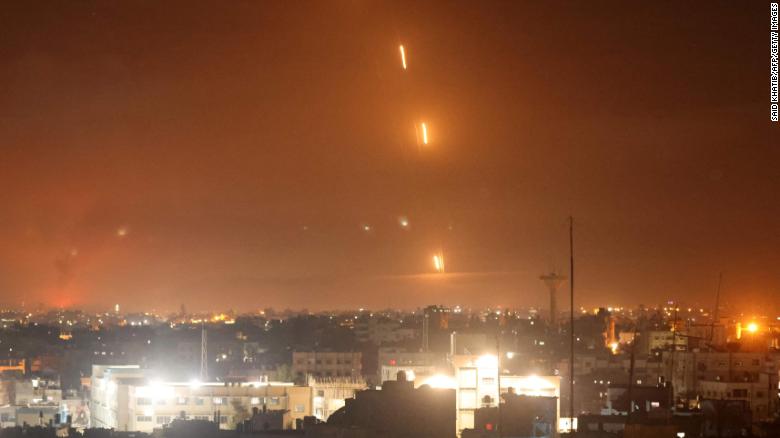
    On Tuesday, the Hamas, or Palestinian militants, located in Gaza fired hundreds of rockets into Israel as a result of this aggressive response to Palestinian protests, causing many Israeli to get wounded or in some cases, die, although the numbers are not very high yet. As retaliation against these rocket launches, Israel has mounted what was considered the "largest strike since 2014" (IDF). Israel has begun to launch airstrikes on Gaza, causing massive destruction and 35 dead, with a few hundred wounded.

    Many citizens have been forced to seek safety in missile shelters, and the missiles from both sides don't seem to be ending anytime soon. A 13 story building was struck down on Tuesday night by Israel for apparently being a place where the Hamas, a nationalist military organization based in Palestine, operated and communicated. Although the Israel Defense force, also known as the IDF, claimed that there was sufficient time since the warning was given to evacuate, some non militants were supposedly injured, and militants from Palestine promised to retaliate as a result, leading to more missile strikes from both sides.

    Riots became common as a way to protest against the actions of the two nations. Israeli Arabs and Palestinians have rioted in Haifa and Lod, leading to further damage to property and 150 suspected rioters arrested. Israeli Jews were accused of stoning a Arab's car, while Israeli Jews were accusing the Palestinians and Israeli Arabs of burning synagogues and other places of worship, causing additional tension to build.

    International communities have called for the de-escalation of the violence taking place, and accuse the Israeli police of abusing power against the Palestinian protesters in Jerusalem. Palestine and Israel both accuse each other of various atrocities, and many nations are denouncing Israel's aggressiveness towards the Palestinians and demand that equality be observed in Jerusalem and between the nations.

Discussion Questions:

1. What should the Palestinians have done as a response to the Israeli police's use of force in Jerusalem?

2. What happens when nations do not resolve their ethnic and religious differences?

Sources:

https://www.foxnews.com/world/israel-idf-hamas-gaza-strip-most-intense-since-2014

https://www.bbc.com/news/world-middle-east-57081848

https://www.cnn.com/2021/05/11/middleeast/israel-gaza-airstrikes-rockets-intl/index.html

Sunday, May 9, 2021

Boko Haram & The Quasi-Failed State Status of Northern Nigeria- Anna Preskill & Anna Yee

Chad and the Escalating Fight against Boko Haram – Africa Center

 Course Themes:

  • Terrorism and destruction done by Boko Haram

  • The failure of state status in Northern Nigeria


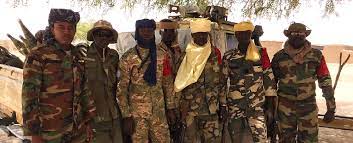
In recent years, Nigeria has been in a significant war with Boko Haram causing economical and social problems all over Europe. Africa has been tremendously impacted by this conflict, and it has done damage to its economy, mainly due to their military group, Boko Haram, who started the feud. Boko Haram has left the picture and come back into it multiple times, always leaving some tragic path. 

This issue started in 2002 when an Islamic military group, Boko Haram, was formed, causing a lot of harm within economical and social culture throughout Northern Nigeria and Africa. Within recent years, Boko Haram has wreaked havoc in Northeastern Nigeria. 


Boko Haram did severe damage to Nigeria and the rest of the world throughout the years. Boko Haram caused four major events that will be talked about for a lifetime. One of these events was suicide bombers who were sent to kill many civilians. This event occurred on Aug. 26, 2011, when Boko Haram sent over undercover suicide bombers to Nigeria's UN capital. Twenty-three people were found dead, but more than 110 people were injured as they tried to escape the bombing. 


Five months later, on Jan. 5-6, 2012, Boko Haram sent a suicide bomber out again to a Christian civilization. They killed six people, whose families were devastated, and went back the next day to mourn the loss of their loved ones at the same civilization. The mourners were met with yet another suicide bomber and another 17 people were killed.


On April 14th, 2014, after not being noticed for two years, Boko Haram once again committed a terrible act. This was their most noticed event and people all over the world soon became involved. Boko Haram kidnapped 276 teen girls from a Secondary School in Chibok Borno. This disaster caused chaos. The girls were terrorized and treated terribly. Many were sold off to become wives and some were put through intense labor services and organizations. People all over the world started to spread awareness by using the hashtags -- #BringBackOurGirls and #RealMenDontBuyGirls on social media. About half of the girls are still missing today. Many people held search parties and families are still looking for their children and hoping for them to return. 


From what we have learned about Boko Haram, we can say that nobody should support them. In fact, people should fight against them and create an end to the group's horrifying acts of violence. We believe that this group is causing one of the biggest sources of harm around the world today. 


Discussion Questions:

  1. Why is it important to fail? What can you learn? 

  2. How does the mistreatment of others affect society and the factors of globalization?

  3. What is terrorism? Why should it be important?

Sources:

The Philippine's Growing Government Corruption - Angelo B.

Course Themes

         1. Show how propaganda elevates the emotional over the rational in an effort to persuade or manipulate people.

         2. What helps explains radicalization of individuals, political movements, and government institutions? 

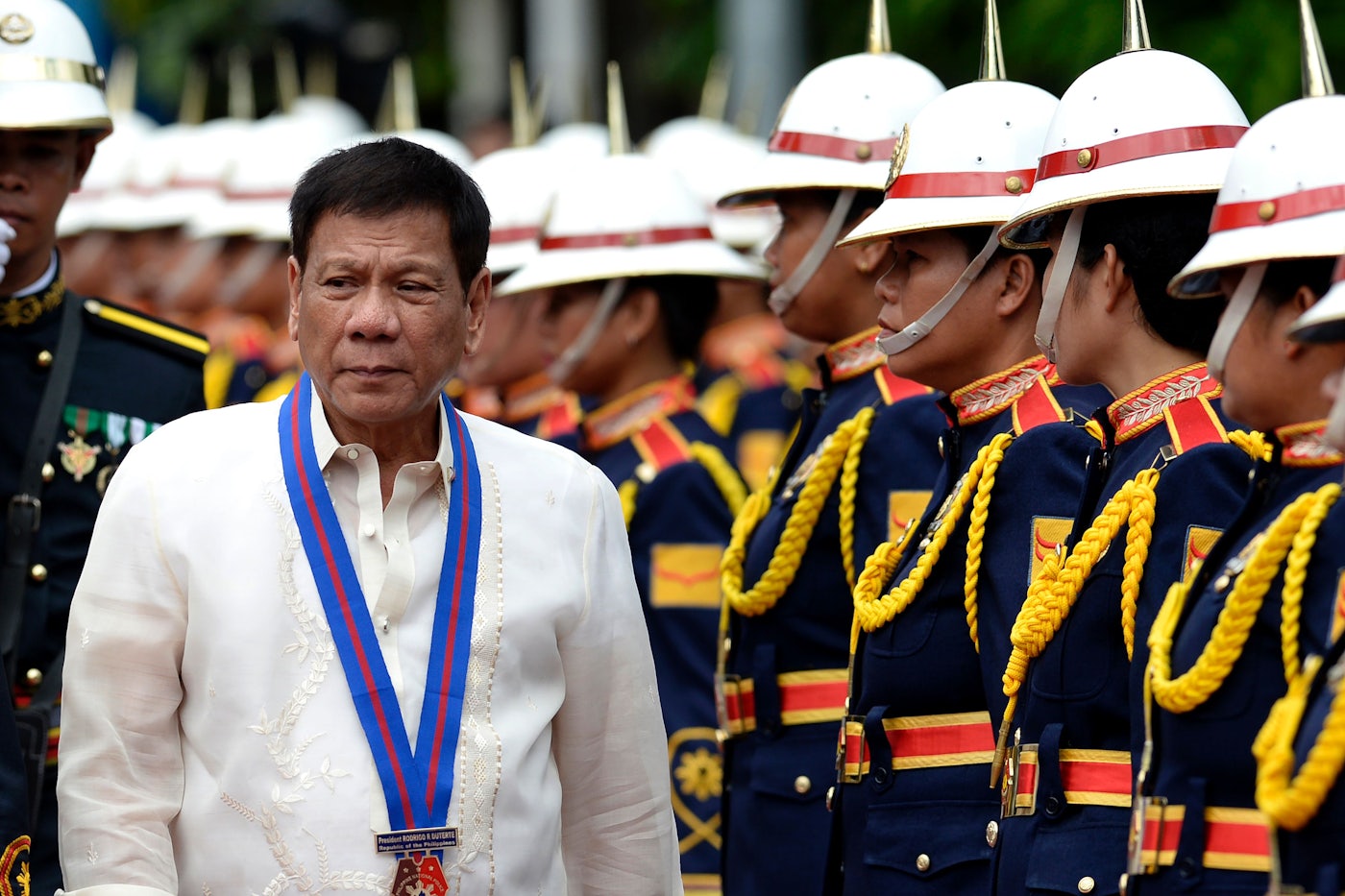
         34 years ago, the people of the Philippines rallied behind a movement known as "People Power" to overthrow the dictator, Ferdinand Marcos. It continued with Joseph Estrada - who was kicked out of office following mass claims of corruption - as well as Gloria Arroyo - who was imprisoned following her own corruption charges. This action that targeted unjust government officials and presidents - who generation after generation arose from wealthy elites, dominating Philippine politics - was a hopeful sign for the future of the nation. However, the massive success of the current president, Rodrigo Duterte, signals a large setback towards this movement and growth.

         The current president of the Philippines resembles many other conservative politicians around the world, and has had his fair share of controversial decisions while in office. For example, the government admits to 6,000 killings from Duterte's iconic "war on drugs," and the actual amount is estimated to be at over 20,000. Basically, while the developing nation struggles to get off its feet, Duterte continues to limit basic human rights through the excuse of combatting drugs. He has also gone under fire from foreign nations and organizations following his denial and downplay of the current COVID-19 outbreak, that is greatly impacting the Philippines. Until just recently, president Duterte refused to even recognize the situation, claiming "it will just die a natural death." However, despite the clear wrongdoings of president Duterte, he is still has a popular within the Philippines, with an 80% approval rating. By comparison, Donald Trump throughout his presidency dropped as low as 40%.

         His popularity stems from the many "strongman" tactics he employs amongst his people. Despite being investigated for crimes against humanity by the International Criminal Court, his success demonstrates how populist leaders around the world, including Donald Trump, are able to withstand challenges or crises that would normally end an average politician's career. President Duterte uses social media with the aid of his many followers to harass and shame any opinions or pieces that go against and criticize any of his actions.

         The main concern with his popularity is the disturbing re-emergence and success of populist leaders and strongman tactics around the world. Political leaders all around the world, from Donald Trump to President Macron, are creating successful careers, and are re-establishing the effectiveness of strongman propaganda in their political campaigns. As Jayson Lamchek - a researcher at the Asia-Pacific College of Diplomacy in Australia - explains, "so many Filipinos seem willing to squander the spirit of [the People Power movement]... curse human rights and democracy as useless, and turn instead to a strongman to change things."         

Discussion Questions

          1. What similarities does President Duterte share with President Trump? What are some differences?

          2. What other "strongman" tactics are employed by government officials? Why is this problematic?

Source:

The New York Times - The Bumbling Corruption Of Rodrigo Duterte

The Atlantic - The Paradox of Rodrigo Duterte

Saturday, May 8, 2021

School Girls Targeted in Devastating Explosion in Kabul - Tyler Potsiadlo

Course Themes:


A. Has the danger of radical Islamist ideology been exaggerated or is it a significant threat?

B. What conditions are necessary to end armed conflict and build a sustainable peace?

On Saturday May 8, an explosion happened near a girls’ high school in Kabul. At least 30 people have been killed and 52 other people wounded from the injury. A firsthand account from a school teacher, Ibrahim, stated that “A car bomb happened first, then two more explosions occurred near the girls school.” Interestingly, a majority of the victims are females. Tariq Arian, the spokesperson of Afghanistan’s Ministry of Interior says that the explosion happened close to Kabul’s Sayeed-ul-Shuhada school. Additionally, he claims that the number of casualties could increase.

Since the explosion happened, it has been identified that this tragedy was aimed at girls seeking an education.. No group has claimed responsibility for the explosion. In a message to the media, Taliban spokesperson Zabiullah Mojahid denied involvement in the tragedy. Over the last few months, a rise of car bombings. This is despite the fact that talks of peace have been going on between the government in Doha, Qatar and the Taliban. Currently, violence is at an unacceptably high level in Afghanistan, which has been remaining at war for the past two decades. An immediate ceasefire between the Afghan government and the Taliban is being called for by institutions and foreign governments.

This incident represents the cries of rights groups who fear that American troops withdrawal from Afghanistan would jeopardize women and their rights. Every day a peace deal between the Afghan government and the Taliban is looking less likely. Even if it did happen, the Taliban’s harsh Islamist ideas, such as keeping girls out of schools, could once again be a reality.

Discussion Questions:

1. Is foreign intervention necessary to protect the rights and safeties of females in Afghanistan from the values of the Taliban?

2. How much more violence will Afghan citizens take before demanding that governmental action is taken against organizations that cause violence?

Works Cited:

Gibbons-neff, Thomas, and Najim Rahim. “Bombing Outside Afghan School Kills at Least 30, With Girls as Targets.” The New York Times, The New York Times, 8 May 2021, www.nytimes.com/2021/05/08/world/asia/bombing-school-afghanistan.html.Hauser, Jennifer. “At Least 30 Killed, 52 Wounded in Blast near Kabul Girls' School.” CNN, Cable News Network, 8 May 2021, www.cnn.com/2021/05/08/asia/kabul-bomb-blast-school-intl/index.ht
ml.

Friday, May 7, 2021

COVID-19 Vaccines Going Unused in Africa- Anna Preskill


Covid-19 Africa: What is happening with vaccines? - BBC News

Course Themes: 

  • COVID-19 Vaccinations not being used

  • COVID-19 vaccine insufficient and not holding protection towards citizens


About 14 months ago we thought our world was being destroyed by COVID-19. The pandemic experience changed our lives, especially how we interacted with people. It went from hugging your family and friends to waving and looking at each other from at least six feet away. 


The last nine months have completely changed society, more than anything else. The COVID-19 vaccine began being tested and offered worldwide -- beginning with the elderly and health care workers. Most countries quickly offered vaccinations for their citizens, but some African nations have been slow to roll it out. The continent has given just 2% of all the vaccine doses given worldwide so far.


South Africa took in the AstraZeneca vaccines but chose to not allow them to be used. According to BBC World News, “The South African government decided not to use them, concerned the vaccine offered insufficient protection from the variant prevalent in the country.” Based on what I have known about the vaccine, it is very impactful and can save many people's lives. However, South Africa prefers Johnson & Johnson. 


Many African countries that received South Africa’s rejected AstraZeneca vaccines did not use them before they expired.


South Africa has also decided to not use the vaccines that they were given because of possible cross-contamination between AstraZeneca and Johnson & Johnson vaccines in a Baltimore lab. According to the New York Times, “Both vaccines were produced at the same site. The mistake forced Emergent to throw out up to 15 million Johnson & Johnson doses after tests showed that the batch failed to meet purity requirements.” This caused over 15 million more doses to be thrown away or held up as they pass required safety tests.


South Africa now has one of the lowest vaccination rates of any country.


Overall, this has caused a heavy uplift of cases in South Africa due to the lack of COVID-19 vaccines that have been distributed while more people feel free to live normally again in South Africa. 


Discussion Questions: 

  1. What is ONE thing that the US can do to help ensure that Africa receives safe/pure vaccines?

  2.  Why should South Africa give AstraZeneca vaccines to its citizens even though they might be less effective than the Johnson & Johnson vaccine?

Sources:

Wednesday, May 5, 2021

Xinjiang Cotton - By Grace Wu


Course Themes:

  1. Show how perception is more important than reality in politics.

  2. The influence of political ideologies and ideas on contemporary affairs: how does nationalism influence human affairs?


Last month, huge retail brands such as H&M, Nike, Adidas, Burberry, and other Western brands have been receiving huge backlash across Chinese social media regarding cotton production in Xinjiang. Chinese media campaigns for the boycott of such brands all started with the global nonprofit organization Better Cotton Initiative (BCI) expressing concern and ceasing production in China’s Xinjiang Uyghur Autonomous Region due to accusations of “forced labor” there.


Xinjiang, China’s biggest region, produces about 1/5, 22% to be exact, of the world’s cotton. Uyghurs are a Muslim minority with millions home to Xinjiang. Allegations have been made that the Chinese government was torturing the Uyghurs in “detention camps” and using forced labor. However, the Xinjiang government spokesman Xu Guixiang has denied these claims, saying that the facilities were incorrectly labeled. They were re-education facilities aimed at lifting the Uyghur minority out of poverty and offering job training. 


Many Western brands, who are members of BCI, issued statements expressing concerns and even cut ties with Xinjiang. Months later after their statements, Chinese netizens are furious at the “offensive” allegations and have launched boycotts and campaigns defending Xinjiang cotton. For example, CGTN shared a video establishing the reality of cotton-picking in Xinjiang, which involved automation and Uyghur farmers voicing that people are willing to cotton-pick by hand because it is a highly paid job. Chinese e-commerce companies, such as Taobao, took major international labels off their sites. Countless Chinese celebrities and influencers have condemned their foreign partners and ended their contracts due to the sensitivity of publicly asserting their nationalistic ideals. The Chinese Foreign Ministry denounced these allegations as “blind accusations” since there is no direct evidence of forced labor.


As the backlash grows vigorously, BCI has deleted its statement from its website. Similarly, several brands such as VF Corp., Inditex (which owns Zara), and PVH all quietly removed their statements that attempted to boycott Xinjiang cotton from their websites. International clothing brands seem to be fearful of offending Beijing since they rely on Chinese materials and factories. In fact, several companies announced that they will continue to support Xinjiang cotton. Other brands have responded that they don’t know exactly where and how every component of their clothes is made since the supply chain is especially complex and because they employed a business outside their company. 


China has become an export “Colossal Titan.” As the world’s second-largest economy with a population of 1.398 billion people, the Chinese consumer class is massive and has strong purchasing power. According to a report released last year by Bain & Company, China is expected to be the world’s largest luxury market by 2025. In 2020, China was the only part of the world to report year-on-year growth, with the luxury market reaching 52.2 billion US dollars. Brands are heavily invested in selling their products to the Chinese. Standing on the opposite of Beijing results in the risk of losing their sales in the largest potential consumer market. However, brands are stuck in a dilemma as they have to achieve the right balance between Western and Chinese markets due to the political pressure from both sides.


Discussion Questions:

  1. How does nationalism play a role in global affairs?

  2. What would you do if you were a brand trying to operate in both the Western and Chinese markets?

  3. How will hostility between the U.S. and China affect the economy?


Sources:

“Nike, H&M Face China Fury over Xinjiang Cotton 'Concerns'.” BBC News, BBC, 25 Mar. 2021, www.bbc.com/news/world-asia-china-56519411.

Friedman, Vanessa, and Elizabeth Paton. “What Is Going On With China, Cotton and All of These Clothing Brands?” The New York Times, The New York Times, 29 Mar. 2021, www.nytimes.com/2021/03/29/style/china-cotton-uyghur-hm-nike.html.

Goodman, Peter S., et al. “Global Brands Find It Hard to Untangle Themselves From Xinjiang Cotton.” The New York Times, The New York Times, 6 Apr. 2021, www.nytimes.com/2021/04/06/business/xinjiang-china-cotton-brands.html.

Suliman, Adela. “Nike, H&M, Burberry Face Backlash and Boycotts in China over Stance on Uyghur Treatment.” NBCNews.com, NBCUniversal News Group, 26 Mar. 2021, www.nbcnews.com/news/world/nike-h-m-face-backlash-china-over-xinjiang-cotton-concerns-n1262019.


India's COVID Devastation - Grace Wu + Kaylah Bresee


Slides: https://docs.google.com/presentation/d/1xl0ettr7ih_dchvaZAw-R8fm-cJ5PZmL2z1ZDRqKHyA/edit?usp=sharing


Course Themes:

  1. Show how perception is more important than reality in politics

  2. Illustrate the dilemma between a nation-state’s immediate self-interest and a longer term “enlightened” self interest that considers the welfare of other nations and of future generations.


Back in early February of 2021, it seemed as if India was coming closer to normal. They reported the same amount of cases as New York did, despite having 50 times the population. At the time, epidemiologists saw the only explanation of this was widespread immunity. However, in April, there was a sudden re-surge of cases. Oxygen and hospital beds were becoming more and more scarce. In turn, people began buying medicine from the black market, frantically trying to help their sick relatives. Images of bodies began flying around social media. On April 27, the total death count surpassed 200,000.    


Many people have blamed the government. Prime Minister Narendra Modi thinks that lockdown should be the last resort. However, some cities and states have implemented new lockdown restrictions since Modi refuses to have a lockdown nationwide. Modi’s team is working on building new oxygen plants. Normally, India’s hospitals only use about 15% of the liquid oxygen made. However, during COVID, they are now using about 90% of the total. Some Indian states do not have oxygen plants where they can produce their own oxygen, so they have to receive the oxygen tanks from other states. However, making oxygen tanks is a difficult task. It takes about 2 hours to fully fill one tank making the process time-consuming. Also, when the oxygen tanks are being transported, they can only travel 25 mph, making the process even longer. Modi announced plans to build 551 new oxygen plants throughout India. However, the government also planned on building 162 of these oxygen plants back in October of 2021, only 33 have been built. Besides the plans to build new oxygen plants, people who are over the age of 18 will be able to receive vaccines on May 1st. What is causing the sudden outbreak? Health experts think it may have to do with new variants.  


Some have criticized Modi because he allowed Holi celebrations. Holi is an important holiday to Hinduism. Many believe that this has a connection to the recent outbreak. Many health experts requested the festivities to be canceled, however, Modi still declined to cancel celebrations. However, the government promised to take safety measures, it is extremely hard to maintain social distancing during such a big holiday.   


The world has been having a large dispute over the issue of vaccine nationalism. Vaccine nationalism is the idea that a country should only be responsible for vaccinating its own population. Currently, dozens of wealthy governments are securing vaccines and/or raw materials needed to produce vaccines for their own populations and therefore limiting the stock available for others. As a result, vaccine access and vaccination rates are high in high-to-upper-income countries but remain low among lower-income and lower-resource countries. According to Duke University’s Global Health Innovation Center, high-income countries have secured 4.7 billion doses of COVID-19 vaccines, compared to only 770 million acquired by low-income countries. This hoarding of vaccines and materials is very detrimental to developing countries such as India. 


The COVID crisis in India has also sparked growing hostility between the U.S. and China, as well as international criticism of both. Although the Biden administration did address the assistance, including the immediate export of raw materials required for India’s vaccine production, therapeutics, rapid diagnostic test kits, ventilators, and protection, the U.S’s delay piled criticism against the Biden administration on social media in and out of India. The Times of India have been condemning the U.S. for being selfish, hypocritical, indifferent, and an unreliable country that “plays geopolitics to serve its own interests”. This is heavily due to the media’s assumption that the U.S. is stockpiling raw materials and the vaccine to ensure the priority of American vaccination. In addition, President Biden’s decision of potentially distributing 10 million U.S. stocks of the AstraZeneca vaccine—a vaccine that has not been approved by the FDA for the U.S. to use—internationally has also been heavily criticized. For example, China has scorned that the U.S. is just distributing inferior vaccines that they don’t want. Such hostility and suspicion for exploiting the pandemic have been an issue between China and the U.S. since the pandemic started. In 2020, the Trump administration had already begun to blame China for “vaccine diplomacy,” a concern that the Biden administration shares. Now, Washington is experiencing the same backlash from Beijing. China has also offered its own help, including medical equipment and Chinese vaccines. Already, Beijing has airlifted 800 oxygen contractors from Hong Kong to New Delhi and will have 10,000 more coming within a week. However, speculations have been made about both the U.S. and China in claims that they are not sincerely concerned about India; Washington is aiding to “damage control” yet Beijing is trying to highlight the failure and “unreliability” of the U.S. and drive a split between India-U.S. relations. 


Discussion Questions:

  1. If you were the leader of a high-income country, would you prioritize your own population’s vaccination?

  2. If you were the Prime Minister, would you still allow religious celebrations to happen during the pandemic? 


Sources:

“How Vaccine Nationalism May Delay Global Herd Immunity.” Medical News Today, MediLexicon International, www.medicalnewstoday.com/articles/herd-immunity-may-take-4-6-years-due-to-vaccine-nationalism.

amanda_m_macias. “U.S. to Give India Raw Materials for Vaccines, Medical Supplies to Help Fight Covid Surge.” CNBC, CNBC, 26 Apr. 2021, www.cnbc.com/2021/04/25/us-to-give-india-raw-materials-for-vaccines-medical-supplies-to-fight-covid.html.

“China Attempts to Exploit India's Criticism of Sluggish U.S. Aid for Its Coronavirus Crisis.” U.S. News & World Report, U.S. News & World Report, www.usnews.com/news/world-report/articles/2021-04-27/china-attempts-to-exploit-indias-criticism-of-sluggish-us-aid-for-its-coronavirus-crisis.

“As US and China Offer Coronavirus Aid, India Wary of Hidden Agendas.” South China Morning Post, 27 Apr. 2021, www.scmp.com/week-asia/health-environment/article/3131268/us-and-china-offer-coronavirus-aid-india-wary-hidden.

Chidanand Rajghatta / TNN / Updated: Apr 27, 2021. “US Government Jolts into Action to Aid India after Criticism of Silence: India News - Times of India.” The Times of India, TOI, 

https://timesofindia.indiatimes.com/india/covid-19-us-diverting-raw-materials-to-serum-institute-for-vaccine-production/articleshow/82265240.cms

Krishnan, Ananth. “China Offers Vaccines to South Asia, Says 'Ready to Support' India.” The Hindu, The Hindu, 27 Apr. 2021, www.thehindu.com/news/international/china-offers-vaccines-to-south-asia-says-ready-to-support-india/article34423395.ece.

Times, Global. “US Slammed for 'Selfish,' 'Indifferent' Response to India's Call for Help amid Devastating COVID-19 Crisis.” Global Times, www.globaltimes.cn/page/202104/1222068.shtml.

Team, BS Web. “Coronavirus Vaccine Registration: FAQs on Covid-19 Vaccine, CoWIN, and More.” Business Standard, Business-Standard, 28 Apr. 2021, www.business-standard.com/article/current-affairs/coronavirus-vaccine-registration-faqs-on-covid-19-vaccine-cowin-side-effects-covishield-risks-covaxin-all-you-need-to-know-121042800459_1.html.

Antonia Noori Farzan, Claire Parker. “How Did the Covid-19 Outbreak in India Get so Bad?” The Washington Post, WP Company, 28 Apr. 2021, www.washingtonpost.com/world/2021/04/27/india-covid-surge-faq/.

“Huge Gatherings at India's Hindu Festival as Virus Surges.” Voice of America, www.voanews.com/south-central-asia/huge-gatherings-indias-hindu-festival-virus-surges.

“mueller7accent-Dict 2002.02.27-8 / Usr / Share / Dictd / mueller7accent.Index.” /Usr/Share/Dictd/mueller7accent.Index, www.apt-browse.org/browse/debian/wheezy/main/all/mueller7accent-dict/2002.02.27-8/file/usr/share/dictd/mueller7accent.index.

Friday, April 30, 2021

Canadian Femicide (Angelina)

Course themes:

How did imperialism and the process of decolonization help shape the history of the 20th and 21st centuries?


Settler colonialism in Canada has targeted its Indigenous population since the beginning of Canadian colonization. The nation has a long history of killing or culturally suppressing its Indigenous population, and this discrimination still has not ended. Indigenous women in Canada have faced inordinately high rates of violence and prejudice for decades, and still do today.


Despite only making up about 2 percent of Canada’s population, Indigenous women account for over 20 percent of reported homicides in Canada. They are over four times as likely to face violence from a partner than non-Indigenous women, and yet a national inquiry launched by the Canadian government reported that the police force and criminal justice system are statistically less likely to bring those who commit violence against Indigenous women to justice. In response to these grim statistics, many have called for a national action plan to be made to investigate the murders or disappearances of many Indigenous women more thoroughly, as an alarming number have been reported missing over the past year.


Discussion questions:

How does the legacy of colonialism and systemic oppression still affect minorities in Western countries today?

Why is understanding intersectionality important?


South Sudan Civil War (Josh & Angelina)

 Course themes:

Why were many nation-states organized on the basis of ethnic identity? Did this do more to solve conflicts or cause conflicts?

What conditions are necessary to end armed conflict and build a sustainable peace?

How did imperialism and the process of decolonization help shape the history of the 21st century?


In December of 2013, civil war broke out in South Sudan with President Salva Kiir dismissed his vice president Riek Machar from office after accusing him of attempting a coup. Tension between the Dinka (36% of the population) and Nuer (16%) tribes of South Sudan has long plagued the country. President Kiir is Dinka while his vice president is Nuer, and Kiir appointed Machar in an attempt to symbolically heal the tribal divide between their two ethnic groups. However, by dismissing Machar from office, Kiir enraged the Nuer in his nation and sparked widespread rebellions from the SPLM-IO (a rebel faction of the Sudan People’s Liberation Movement mostly comprised of Nuer and other South Sudanese ethnic minorities). 


While the conflict mainly started because of tensions between the Dinka and the Nuer, many other ethnic groups in South Sudan have joined the Nuer rebels in fighting against President Kiir’s mostly Dinka administration. During Turkish-Egyptian and British colonial rule of the Sudanese region in the 19th and 20th centuries, the tribal groups in southern Sudan remained largely unconnected and underdeveloped. In addition, British colonizers played on the tribal tensions in South Sudan in order to consolidate power. Today, Nuer rebels have fled into territory inhabited primarily by non-Dinka tribes, leading the Dinka government to mistake them for Nuer rebels and persecute them as well. Because of this, rebellions and conflict with the government has spiraled far beyond the scope of just Dinka and Nuer people.


Due to the South Sudanese Civil War, South Sudan’s government has focused inordinate amounts of its funding on the military rather than important humanitarian causes within its nation. Hundreds of thousands of people have been killed and up to four million civilians have been displaced.Famine and food shortages have wracked the nation as different tribes fight over agricultural land and about 70% (over 8 million people) of the nation’s population is in need of humanitarian assistance. The COVID-19 pandemic has only increased the severity of the situation as refugee camps have become superspreader locations for the virus. Although a cease-fire was reached in February 2020, conflict has not died down and UN officials fear the agreement will soon be broken. 


Discussion Questions:

Why can decolonization processes that fail to take ethnicity into account be harmful?

Does diversity (specifically in regards to religion, race and ethnicity) benefit a country, or does it cause tension and hinder political progress?


Thursday, April 29, 2021

Deforestation in Brazil - Anna Yee


Course Themes:

  • The influence of political ideologies and ideas on human history and contemporary affairs 

  • The relationship between the West/USA and the rest of the world


In the current fight against climate change, Brazil promises to end illegal deforestation in their country. However the Brazillian President, Jair Bolsonaro, and his minister of the environment, Ricardo Salles, do not seem so dedicated to the cause, in fact, many speculate they are working against it. In the past, the Brazilian government has undermined environmental protection acts and in doing so, let the deforestation rate in their country rise to the highest it had ever been within the last 100 years. 


What makes this interesting is that within his presidential campaign, Joe Biden had stated he would raise 20 billion dollars in order to save the amazon. Now that Biden is president, Bolsonaro has called in this check, asking for money, claiming he will use it to pay for conservation projects. The Brazillian president continues to ask for funds however there seems to be little to no progress taking place in Brazil (nor much concrete intentions to). Many other international leaders are warning others not to fund Bolsonaro because he already has access to hundreds of millions of dollars to put towards forest conservation and it makes no sense why he would need outside funding. 


Many organizations within Brazil are also discouraging funds to the government because they do not trust Bolsonaro, Salles, and the Brazillian government in general. Brazillian budget plans have revealed that the government has decreased the budget for environmental conservation further implying that there is no real progress being made. Illegal deforestation benefits cattle farmers, loggers, and illegal mining companies. The Brazillian government has been seen backing bills and initiatives that make it easier for this kind of illegal work to proceed and grow. 


Discussion Questions: 

  • What do you think is a possible move in order to pressure the Brazillian government to lead environmental changes?

  • Why is it so hard to choose between economical gain and the welfare of the earth?


https://www.nytimes.com/2021/04/21/world/americas/bolsonaro-climate-amazon.html